On 1st July, the ‘Measures for the Supervision and Administration of the Quality of Fibre Products’—dubbed ‘the strictest ever’ by the children’s clothing industry—and the mandatory national standard GB 18383—2025 ‘General Technical Requirements for Fibre-Filled Products’ officially came into force.
Just how strict are these new rules? To summarise a few key points: the use of reprocessed fibres as raw materials in textile products for infants and young children, as well as in next-to-skin underwear, is now strictly prohibited; for textile products containing filling fibres intended for infants aged three and under, no recycled chemical fibres other than recycled polyester may be used; school uniforms, underwear and products for infants and young children must accurately label fibre composition and safety categories, ensuring that information is verifiable, processes are traceable and accountability is established. The State Administration for Market Regulation has also included new channels such as e-commerce platforms and live-streaming marketing within the scope of its key regulatory oversight.
Why are the new rules so strict? Because there are indeed too many issues within the industry that require regulation. According to spot-check data for children’s and infant clothing released by the State Administration for Market Regulation for 2025, the non-compliance rate remains as high as 11.7 per cent, meaning that more than one in every ten items of children’s clothing fails to meet standards. The issues are primarily concentrated in areas such as fibre content and the tensile strength of accessories, with fibre content failing to meet standards in 18 batches being the most frequent quality issue. In other words, many items of children’s clothing cannot even clearly state ‘what they are made of’, let alone ensure safety.
With the new rules in place, a large number of small and medium-sized manufacturers are facing a ‘major compliance test’. With testing capabilities lagging behind, raw materials failing to meet standards and traceability systems non-existent, their accelerated elimination is all but a foregone conclusion.
Yet at this critical juncture, one children’s clothing brand has boldly declared: ‘The new rules pose no pressure to us.’
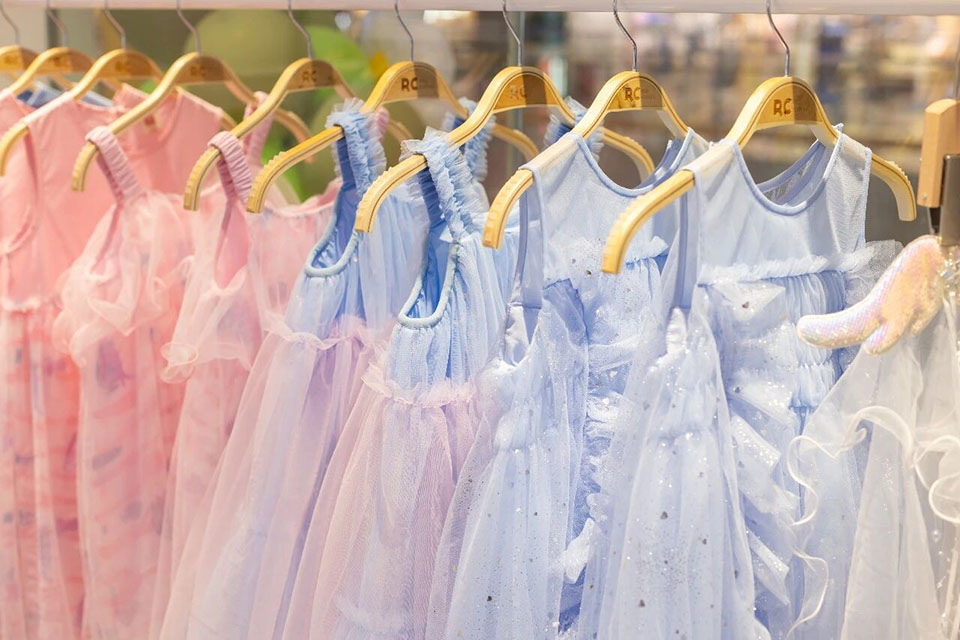
This statement comes from Red Copper, an original designer children’s clothing brand established in 2019 and owned by HT( Shandong) Group. Why does Red Copper dare to say it feels no pressure? Put simply, it boils down to one thing: they had done their homework well in advance.

Even before the new regulations were officially introduced, Red Copper’s product development and production processes had consistently adhered to current national standards such as GB 31701, strictly controlling risk points across all product categories from start to finish. At the same time, the brand upgraded its random inspection procedures for incoming raw materials and comprehensive testing processes for finished garments, whilst paying particular attention to key items identified in previous spot checks—including colour fastness, chemical safety indicators, down purity and down-proofing performance. It completed the qualification screening of fabric and down suppliers, as well as the re-testing of samples, well in advance.
On the procurement side, a strict threshold has been established: for materials used in infant and children’s garments and those worn next to the skin, the use of any recycled waste or non-compliant regenerated synthetic fibres is strictly prohibited; only compliant recycled polyester is permitted for use in the infant and children’s product range. Down suppliers must provide proof of raw material origin and third-party test reports, and each batch of incoming materials must be accompanied by a quality inspection certificate. Upstream factories unable to provide compliant certification for recycled fibres are immediately disqualified.
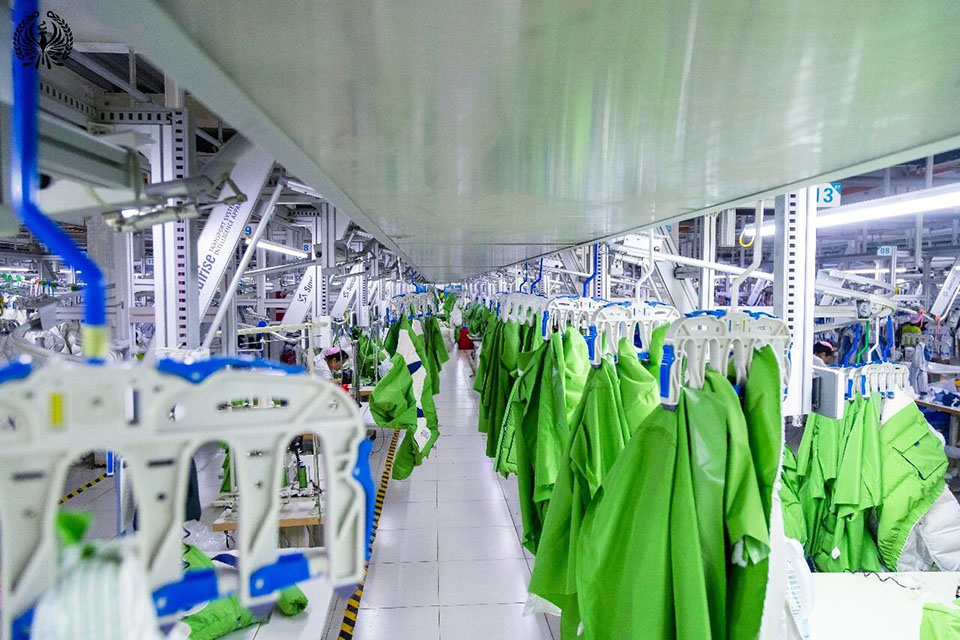
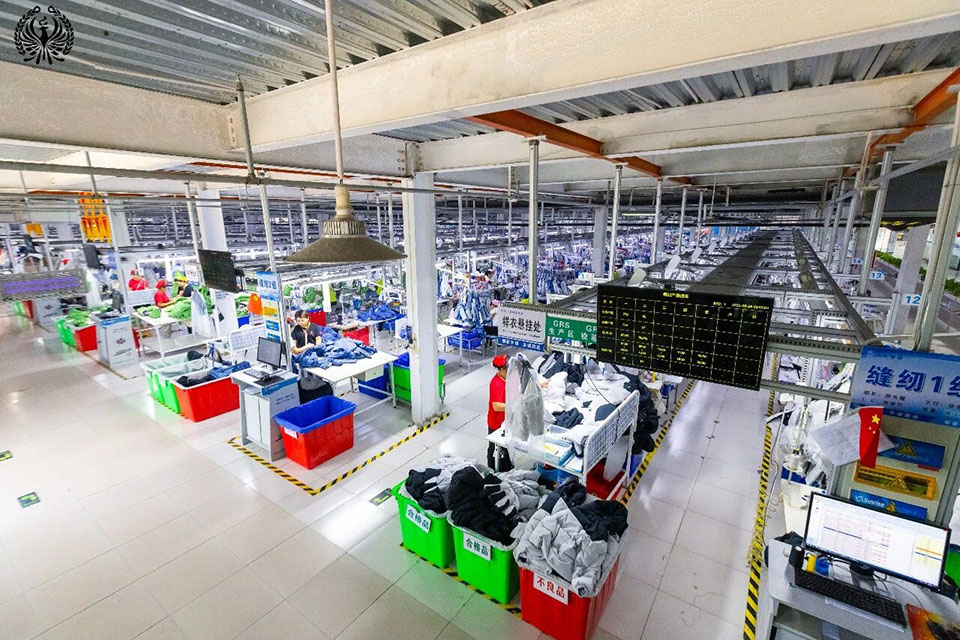
Even more crucial is the traceability system. Red Copper’s approach involves dividing traceability into three stages: at the raw material stage, records are established for each batch of fabric and down, retaining supplier qualifications and purchase documents; at the production stage, each garment is linked to a product code and production batch, with records kept of the work teams responsible for cutting, down filling and sewing; at the retail stage, hangtags clearly indicate fibre composition and safety categories. All fabrics are sent to the Group’s own specialist laboratory for testing prior to production; only those that pass the tests are approved for production. All raw material documentation, production records and internal test reports for each batch are uniformly archived, with retention periods meeting the requirements for long-term retrieval during regulatory audits. Whilst this system may sound simple in theory, implementing it thoroughly requires a significant investment of both human and material resources.

In the product testing phase, Red Copper’s internal standards are even stricter than national standards; for example, the internal control limits for indicators such as pilling and soap wash colour fastness are higher than those set by national standards. Every batch of fabric and down is tested, whilst every batch of finished products undergoes 100 per cent sampling inspection, supplemented by additional seasonal random spot checks. In their own words, the aim is to ensure zero deviation between the labelled composition and the actual composition.
In such an environment, costs naturally rise, which is unavoidable. However, Red Copper has adopted several methods to address this: for example, using AI generative technology and Style3D digital design to reduce sample waste, concentrating bulk procurement of compliant raw materials to lower unit prices, optimizing cutting and filling processes to reduce fabric and down loss, and saving a significant amount of third-party repeated testing costs in its own laboratory. According to the brand, most of the new compliance costs have been absorbed internally, with only minor adjustments to terminal prices and no significant price increases.
Viewed from another perspective, the new rules may not be entirely bad news for brands such as Red Copper. With industry entry barriers having been significantly raised, many brands have been forced out of the market due to failing to meet testing and raw material standards. This, in turn, has provided compliant brands with an opportunity to consolidate upstream resources, ensuring a consistently stable and high-quality supply chain by carefully selecting the best fabric and down manufacturers.
For those who are unprepared, the new rules taking effect on 1 July may present a major challenge. However, for Red Copper, this is more like an exam for which they have been preparing for a long time; the answers have long been ready, and now all that remains is to hand in the answer sheet.
China Textiles